

Takeaways from conference.
Author: Tetyana Buturlakina, career counselor, ambassador of the National Centers for Europass and Euroguidance in Ukraine.
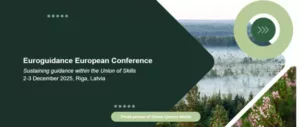
Key aspects and trends of career counseling and career guidance in modern Europe are determined not only by objective vectors and challenges of the labor market, but also by geopolitical, demographic and environmental factors. This was the key slogan of the Euroguidance European Conference summing up the year on the theme "SUSTAINING GUIDANCE WITH THE UNION OF SKILLS" in Riga, Latvia, on December 2-3, 2025.
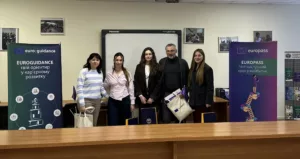
As a participant in the conference, Tetyana Buturlakina, Ambassador of the National Europass and Euroguidance Centres in Ukraine, working in the area of “Career guidance for integration into the modern labour market: skills development in priority sectors of the economy”, shared key insights from the materials reviewed following the conference.
The motto of the European initiative UNION OF SKILLS is "Investing in People for a Competitive European Union." The European Commission has launched the Union of Skills as a plan to improve high-quality education, training, and lifelong learning. The need for skilled professionals is driven by the urgent necessity to respond to new challenges and remain competitive. However, as job requirements evolve, many workers struggle to keep pace with change, while businesses are unable to find the talent they need. These skills and workforce gaps are hampering Europe's competitiveness.
The aim of the UNION OF SKILLS is to:
- ensure a higher level of basic and advanced skills;
- provide opportunities for citizens to regularly update and learn new skills;
- facilitate the recruitment of workers by businesses across the EU;
- attract, develop and retain the best talent in Europe.
Key components of the UNION OF SKILLS are:
Developing skills for quality lives and work - skills development, education and training are essential for creating good jobs and improving lives. The Skills Union aims to:
- pilot a basic skills support scheme to ensure that every young person has strong reading, maths, science and digital skills;
- improve skills in science, technology, engineering and mathematics (STEM), promote STEM careers, attract more women and prepare people for the digital and clean technology transition through a strategic plan for STEM education;
- implement a new EU strategy for vocational education and training (VET) to make vocational education and training more attractive, innovative and inclusive;
Regular upskilling and reskilling - learning new skills should be a regular part of people's working lives to keep up with the evolving economy and ensure lifelong learning.
The Commission:
- proposes to expand the use of micro-accreditations as flexible learning solutions;
- strengthen the Pact for Skills to help more workers acquire new skills in strategic sectors;
- pilot a Skills Guarantee to offer workers at risk of unemployment the opportunity to acquire new skills; The first call for proposals was published in November 2025.
- The EU will support the creation of EU skills academies to equip businesses with the skills needed for the green transition under the Green Deal and the Clean Industrial Deal.
Promoting the free movement of workers - circulating skills across the EU will unlock the full potential of the single market. The Skills Alliance focuses on:
- a skills transfer initiative to improve the transferability of skills and qualifications across the EU, regardless of where they were obtained;
- work on a European degree to promote the development of innovative joint curricula across the EU;
- a new European Vocational Diploma;
- strengthening alliances of European universities and centers of vocational excellence;
- European school alliances to increase the mobility of teachers and students.
Attracting, developing and retaining talents
Europe must attract, develop and retain the best talent, which is crucial for innovation, growth and competitiveness.
The Commission:
- create an EU talent pool to recruit jobseekers from outside the EU at all skill levels, especially for jobs where there is a shortage of skilled workers;
- present a visa strategy in January 2026 to facilitate entry to the EU for the best students, skilled workers and researchers;
- launch the "Choose Europe for Science" initiative under the Marie Skłodowska-Curie Actions in 2025 to attract and retain talent; the next call for proposals is planned for December 2026.
During the conference, the keynote speech by Olga Tsiurva, Policy Officer (Seconded National Expert), Directorate-General for Employment, Social Affairs and Inclusion, focused on this key theme: "The Skills Union: A shared vision for education and skills and the essential role of career guidance" and highlighted that particular emphasis will be placed on the essential role of career guidance in this framework - from empowering people to navigate transitions to supporting systems through better tools, data and collaboration.
During a panel discussion with the participation of Dr. Jaana Kettunen, President, IAEVG, Dace Briede-Zalīte, Chair of the Latvian Association for Career Development Support, Ilze Astrida Jansone, Chair of the Euroguidance Network Steering Group, Jan Voldendorp, Board Member, Network for Innovation and Guidance in Europe (NICE), Cynthia Harrison (Villalba), Policy Officer, CEDEFOP, shared their thoughts on how to make the career guidance profession sustainable.
The second day of the conference was dedicated to practical workshops. Dr. Gill Frigerio, a career development expert from the University of Warwick, UK, presented the career development handbook "The Career Development Handbook: groundwork and goals". Of particular note in the discussion is the section on practical recommendations on managerial aspects of career counselling practice.
Link here: Hooley, T., Alexander, R. and Frigerio, G. (2024) The Career Development Handbook: Foundations of Professional Career Practice. Trotman Books.
Together with colleagues from the Euroguidance network from European countries, as part of the workshop "Euroguidance Network Resources for Practitioners", after a short presentation, we held small group discussions dedicated to the important skills and knowledge needed to provide effective mobility advice.
The practical part of the workshops also covered the topics "From organizational needs to European impact: developing meaningful Erasmus+ KA2 projects", "Forming competencies using the Youthpass tool in non-formal learning", "From reflection to action: implementing environmental recommendations in practice", "Unlocking Quality in Career Guidance", "Introducing the GreenComp framework program: Linking career development with sustainable development", "Career guidance in rural communities".
Sincere gratitude to the National Europass and Euroguidance Centres in Ukraine for the opportunity, as an Ambassador in the area of “Career guidance for integration into the modern labour market: skills development in priority sectors of the economy”, to join a strong expert community of career guidance professionals and practitioners across Europe, where I had the chance to represent Ukraine and share experience and best practices in the context of integration-related challenges and priorities.
Further details about the conference materials can be found at the following links: